Released for PlayStation 1 exclusively in Japan on June 24, 1999, UFO: A Day in the Life is one of those quirky games that's hard to describe in a few words.
You play as a small alien whose job is to watch over an apartment building, traveling back and forth in time within a single day to rescue 50 aliens who were aboard a spacecraft that crashed into it.
The tricky part is that the aliens you're rescuing are invisible, so this isn't a straightforward task, since you can't actually see them. To find one, you choose a room and a time to travel to, watch the scene carefully for one in-game hour (roughly one real-time minute), and snap a photo whenever something strange seems to be happening. Maybe a cat hisses at nothing, or food disappears off a plate.
Once you return to the mother alien, she reveals your photos, and if you caught the right alien at the right moment, a tractor beam pulls it back to the ship. Rescuing aliens unlocks more rooms and more time slots to explore.
Waiting for the right moment
Just taking a picture of an alien isn't enough to rescue it, though. In most cases, you need to catch it performing a specific action. For instance, an alien disguised as a tree might pull a funny face the moment a character waters it, and you have to snap that exact instant. Some aliens even require photos of several different situations before they can be rescued.
The game does give you hints. You can pull up a list of the aliens you've found, and any you haven't fully captured yet will show hints about the situations you still need to photograph.
Speaking of hints for finding Japanese treasures, that's exactly what our proxy service, Negai Japan, is for. We make shopping in Japan simple and deliver Japan-exclusive items, like figures and games, straight to your door. Check out negaijapan.com to see how it works.
Are you interested in retro games? We're sure you'll like these products!
The fun part of this game isn't just hunting aliens, it's following the human characters' lives too. Since you end up watching every room over the course of a full day, you naturally witness events unfold, and each character has their own small storyline that comes together the more rooms and time slots you unlock.
It's also fascinating to see how capturing an alien changes things for the humans. Take that tree-like alien I mentioned earlier: a dramatic artist waters it throughout the day. Once you capture the alien, going back to that same room and time slot shows the artist staring at an empty pot instead, then throwing himself to the floor in despair. He even gets up to grab some flowers first, just so he can throw himself down again with a bit more flair.
A game of patience
Enjoying this game does require patience. Each visit only takes about a minute, and a radar tells you whether any aliens are currently in the room, but you'll still find yourself rewatching the same scene several times trying to pin down the exact moment and spot on screen where you need to shoot.
That's made harder by the fact that you only get 10 shots per visit before you're sent back to the ship. And even if an alien is present in a room at a given time, that doesn't guarantee every photo you need can be taken then. Often you'll have to catch the same alien across different time slots, and sometimes even different rooms, some of which you may not have unlocked yet. More than once I spent ages trying to nail a pose, only to later discover I needed to unlock more rooms and time slots before I could actually capture it.
Let us help you buy Japanese treasures
Let us help you buy Japanese treasures
Ready to access Japan's incredible online stores? Our expert team handles everything from ordering to shipping, so you can focus on finding those perfect items.
And even when you do find the right moment, the window for some poses is so brief that a split-second hesitation means you miss it entirely, and you might even convince yourself it wasn't the right situation after all.
So, in short, if you don't have the patience for this kind of trial and error, this game probably isn't for you.
For Japanese learners
The game mostly uses simple vocabulary. It avoids kanji, though it does write a lot of words in katakana that would normally be in hiragana, likely to give the aliens' speech some extra flair. As long as you focus on the reading itself rather than which alphabet it's written in, you shouldn't run into much trouble. I'd call this a good fit for upper beginners.
Conclusion
With its cast of quirky characters and its genuinely unique gameplay, this game is a poster child for what a niche title looks like. But if you have the patience to watch and rewatch scenes carefully, you might just find an unexpectedly fun experience here.
I do wish the game were a bit clearer about whether an alien can actually be captured with the rooms and time slots currently available, and that it were a little more forgiving with the timing on some poses.
Liked this post?
Follow us on the social media of your choice to be the first to know about our latest updates!
 BRL
BRL AUD
AUD CAD
CAD EUR
EUR GBP
GBP MXN
MXN


 UFO: A Day in the Life
 UFO: A Day in the Life
 PlayStation 1





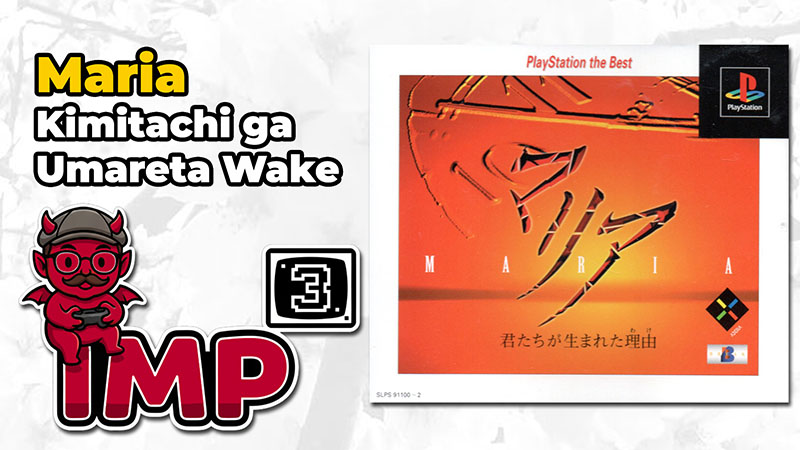 Maria: Kimitachi Ga Umareta Wake
A mystery visual novel released exclusively in Japan in 1997, Maria puts you in the shoes of a doctor unraveling the dark past of a teenage girl with multiple personalities. The graphics and pacing show their age, but the story is intriguing enough to keep you going.
Maria: Kimitachi Ga Umareta Wake
A mystery visual novel released exclusively in Japan in 1997, Maria puts you in the shoes of a doctor unraveling the dark past of a teenage girl with multiple personalities. The graphics and pacing show their age, but the story is intriguing enough to keep you going.
 Jade Cocoon: Story of the Tamamayu
 is a unique PS1 monster-collecting RPG that stands apart from Pokémon with its fusion system, where merged creatures become hybrids of their parents. Discover what makes this 1998 classic special, from its strategic gameplay to its rich lore.
Jade Cocoon: Story of the Tamamayu
Jade Cocoon: Story of the Tamamayu is a unique PS1 monster-collecting RPG that stands apart from Pokémon with its fusion system, where merged creatures become hybrids of their parents. Discover what makes this 1998 classic special, from its strategic gameplay to its rich lore.
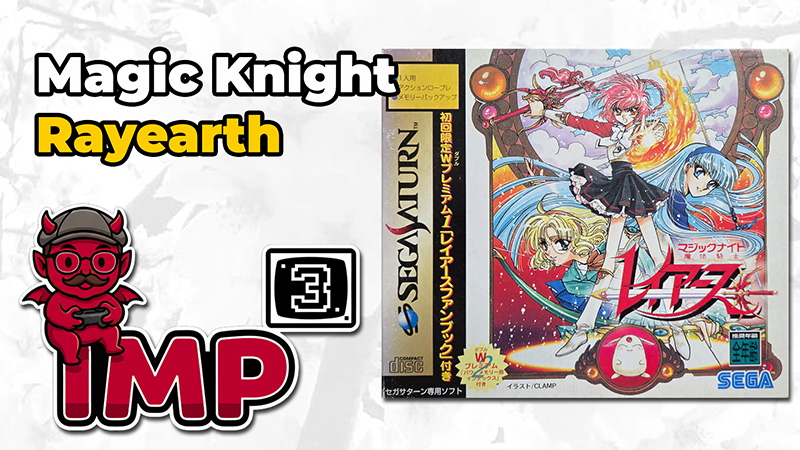 Magic Knight Rayearth
A surprisingly polished action RPG based on the beloved anime and manga series. Even if you're not a fan of the original work, Magic Knight Rayearth for Saturn is well worth your time.
Magic Knight Rayearth
A surprisingly polished action RPG based on the beloved anime and manga series. Even if you're not a fan of the original work, Magic Knight Rayearth for Saturn is well worth your time.

 Facebook
 Youtube
 Instagram