Jade Cocoon: Story of the Tamamayu was released for PlayStation 1 in Japan on December 3, 1998, and in the rest of the world in 1999.
What Makes Jade Cocoon Different?
At its core it's a monster collecting RPG, but you'd be mistaken to compare it to Pokémon or Digimon. Jade Cocoon has some ideas that make it feel unique.
A quick look may make you think this is just another monster collection RPG
Although the focus is on collecting creatures and making them battle, the protagonist, called Levant, also participates in the fights. Here's the twist: while your monsters gain experience, level up and get stronger when they beat enemies, like in a traditional RPG, Levant doesn't get stronger from battling. In fact, the only way to make him stronger is by buying equipment.
Always check the shop for stronger equipment
However, using him in battle is indispensable, because he's the one who can capture beasts inside cocoons. And capturing is the only way for him to gain experience and levels—Levant doesn't gain stats from leveling up, but raising his level increases his capture success rate for stronger monsters and his chances of successful captures in general.
Just like Pokémon, you raise your chances by weakening the enemies, but it still has a chance of failing. And Levant's level also counts when calculating the odds.
You need to be fighting as Levant to capture monsters
You can also transform captured creatures into silk to sell—giving you even more reason to keep hunting duplicates. This makes capturing an important way of making money in the game.
Sacrificing monsters is sad, but it's the only way to get silk and make money
Are you interested in Jade Cocoon? We're sure you'll like these products!
The main aspect that separates Jade Cocoon from other monster capturing games is the merge function. At first I thought it would be like Persona, where fusing creates a different already existing species. However, in this game, fused creatures are actually hybrid forms of their parents, in both appearance and skills. You can even name your new creations.
One of the fun parts of the game is creating new monstrosities by merging monsters
This opens up opportunities for strategies, having you decide which beasts to fuse, if keeping the same element is better than mixing them, or if you should focus on certain stats, since merging can both raise or lower the resulting creature's stats.
And speaking of fusion being advantageous, Negai Japan can merge products from different Japanese stores with our free consolidation service. By combining your items into fewer boxes, you'll save big on international shipping! Visit negaijapan.com to get your Japanese treasures delivered!
Let us help you buy Japanese treasures
Let us help you buy Japanese treasures
Ready to access Japan's incredible online stores? Our expert team handles everything from ordering to shipping, so you can focus on finding those perfect items.
Speaking of elements, every monster belongs to at least one of four elements. Attacks based on one element are stronger against another one. Fortunately the game even displays the enemy's element during battle, inside a small circular icon that reminds you which element is more effective.
Each monster has a small icon showing its elements and which ones are strong against it
The Story
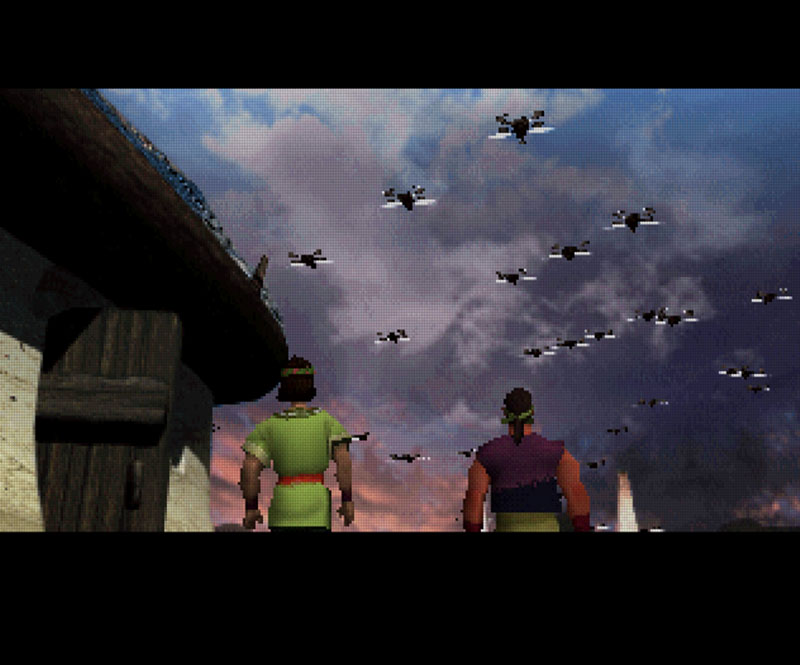
The plot revolves around finding a cure for a curse that made most of the villagers in Levant's hometown fall asleep. This seemingly simple story hides a rich lore that contains the origins of the creatures inhabiting the world, its gods, and even how humanity itself came to be.
A swarm of monster kickstart the plot of the game
With the few villagers left awake, including his fated wife Mahbu who has the power to purify cocoons, merge monsters and turn cocoons into silk, Levant, the single Cocoon Master, departs on a journey to heal the townsfolk.
Mahbu is crucial to Levant's journey, but at what cost to herself?
Graphics and Controls
While the characters and battle locations are rendered in 3D, the backgrounds of towns and forests are pre-rendered images, which are fine-looking. This does mean they chose to use tank controls, popularized by Resident Evil. So younger gamers may struggle a bit to get used to the controls, and avoiding enemies can prove to be a challenge.
Pre-rendered backgrounds allow graphics otherwise impossible on PS1, but the tank controls could be better
Learning Japanese Through Gaming?
The Japanese version of Jade Cocoon, called Tamamayu Monogatari, may require an advanced level of Japanese skills.
Most characters speak in a classical way, using old words and ways of speech. On top of that, the plot itself sometimes gets a bit complex, with a rich lore behind the world and events. So the language can get in the way of the game's enjoyment, even for intermediate learners.
Most of the dialogue is voiced, though, by talented voice actors. So it does serve to practice listening.
Many characters, especially the older ones, speak using complex Japanese
Final Verdict
While the difficult Japanese language used in the game does act as an obstacle, the unique mechanics not found in other monster battling RPGs give Jade Cocoon a twist that's worth experiencing. Reviews say the main story can be completed between 15 and 20 hours.
If you have interest in retro games like Jade Cocoon: Story of the Tamamayu, Negai Japan helps acquire this and many other Japanese treasures!
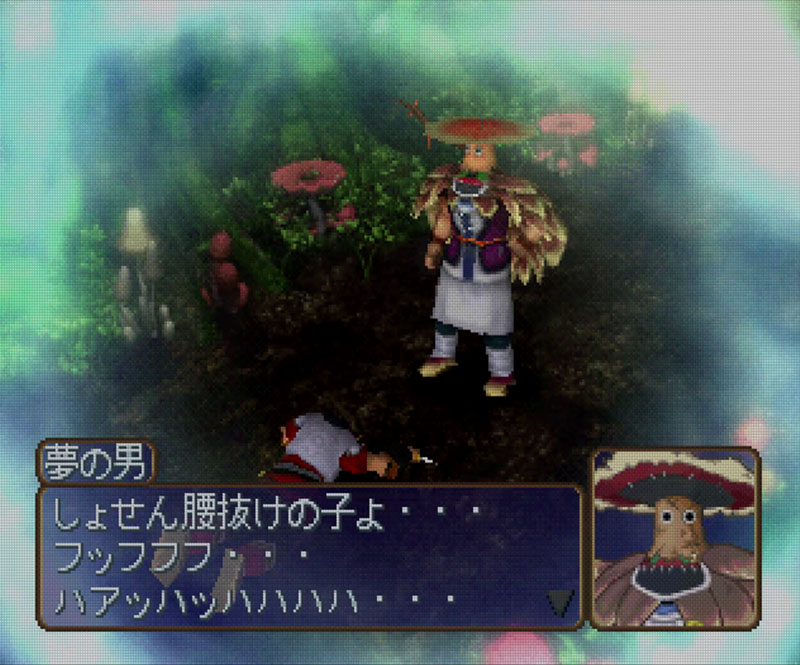
A relatively short adventure lets you figure out fast who this mysterious figure is
Liked this post?
Follow us on the social media of your choice to be the first to know about our latest updates!
 BRL
BRL AUD
AUD CAD
CAD EUR
EUR GBP
GBP MXN
MXN


 Jade Cocoon: Story of the Tamamayu
 玉繭物語
玉繭物語 PlayStation 1
 A quick look may make you think this is just another monster collection RPG
 Always check the shop for stronger equipment
 You need to be fighting as Levant to capture monsters
 Sacrificing monsters is sad, but it's the only way to get silk and make money


 One of the fun parts of the game is creating new monstrosities by merging monsters
 Each monster has a small icon showing its elements and which ones are strong against it
 A swarm of monster kickstart the plot of the game
 Mahbu is crucial to Levant's journey, but at what cost to herself?
 Pre-rendered backgrounds allow graphics otherwise impossible on PS1, but the tank controls could be better
 Many characters, especially the older ones, speak using complex Japanese
 A relatively short adventure lets you figure out fast who this mysterious figure is
 UFO: A Day in the Life
 is one of the strangest, most patience-testing games I've picked up on impulse: a PS1 exclusive where you hunt invisible aliens across an apartment building using nothing but timing and a camera. Here are my first impressions after 3+ hours.
UFO: A Day in the Life
UFO: A Day in the Life is one of the strangest, most patience-testing games I've picked up on impulse: a PS1 exclusive where you hunt invisible aliens across an apartment building using nothing but timing and a camera. Here are my first impressions after 3+ hours.
 Maria: Kimitachi Ga Umareta Wake
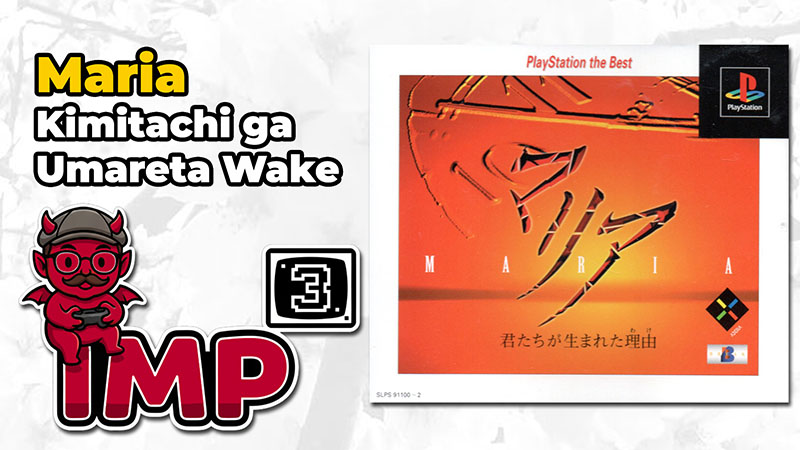
A mystery visual novel released exclusively in Japan in 1997, Maria puts you in the shoes of a doctor unraveling the dark past of a teenage girl with multiple personalities. The graphics and pacing show their age, but the story is intriguing enough to keep you going.
Maria: Kimitachi Ga Umareta Wake
A mystery visual novel released exclusively in Japan in 1997, Maria puts you in the shoes of a doctor unraveling the dark past of a teenage girl with multiple personalities. The graphics and pacing show their age, but the story is intriguing enough to keep you going.
 Magic Knight Rayearth
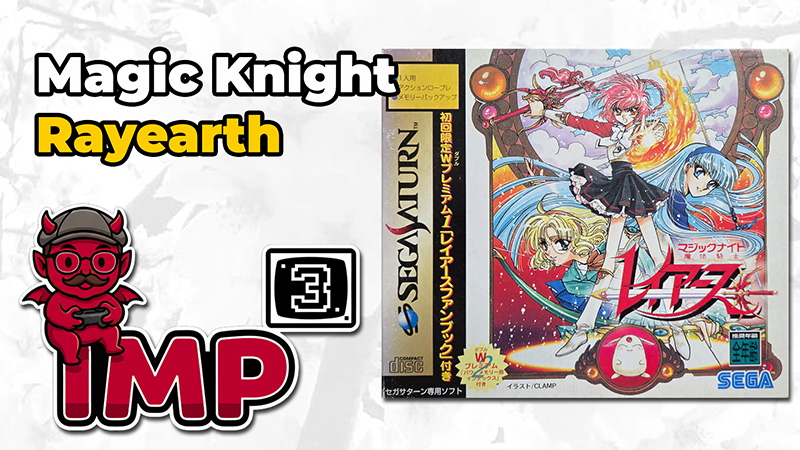
A surprisingly polished action RPG based on the beloved anime and manga series. Even if you're not a fan of the original work, Magic Knight Rayearth for Saturn is well worth your time.
Magic Knight Rayearth
A surprisingly polished action RPG based on the beloved anime and manga series. Even if you're not a fan of the original work, Magic Knight Rayearth for Saturn is well worth your time.

 Facebook
 Youtube
 Instagram