Maria: Kimitachi Ga Umareta Wake was released exclusively in Japan for the Sega Saturn and PlayStation on December 11, 1997.
It is a mystery visual novel with minimal gameplay, consisting mainly of making choices, although there is one short exploration section; or two, depending on your choices.
The Visuals and Sound
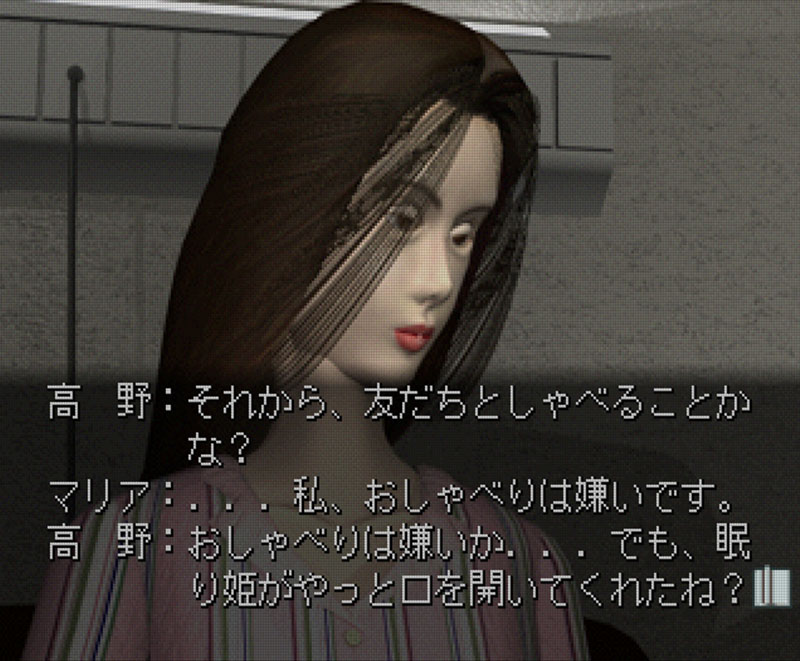
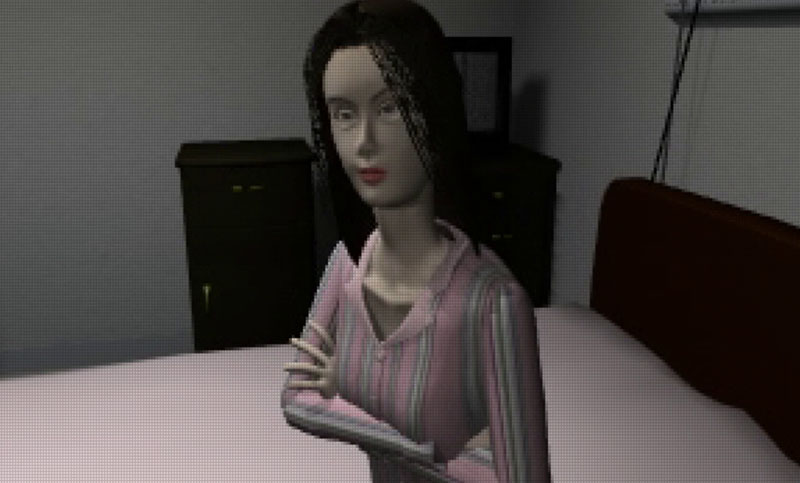
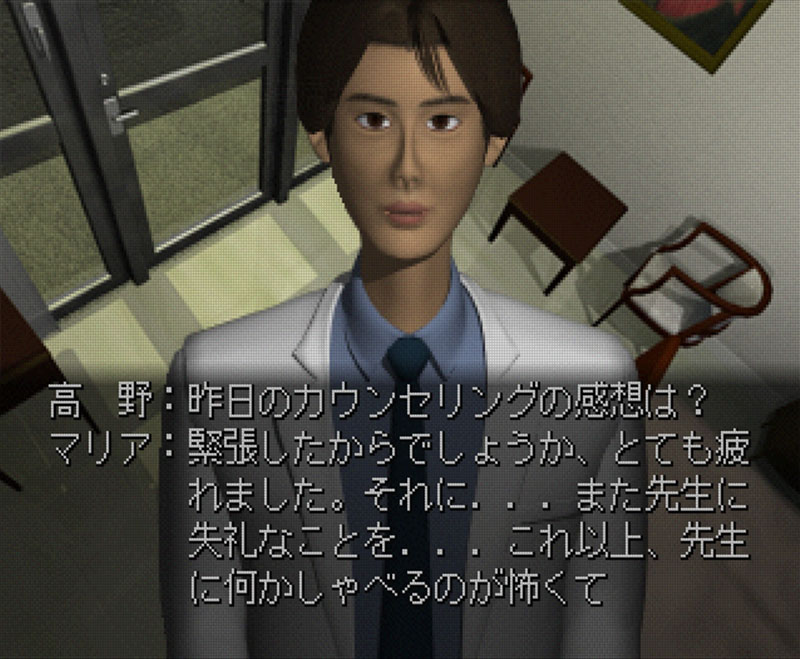
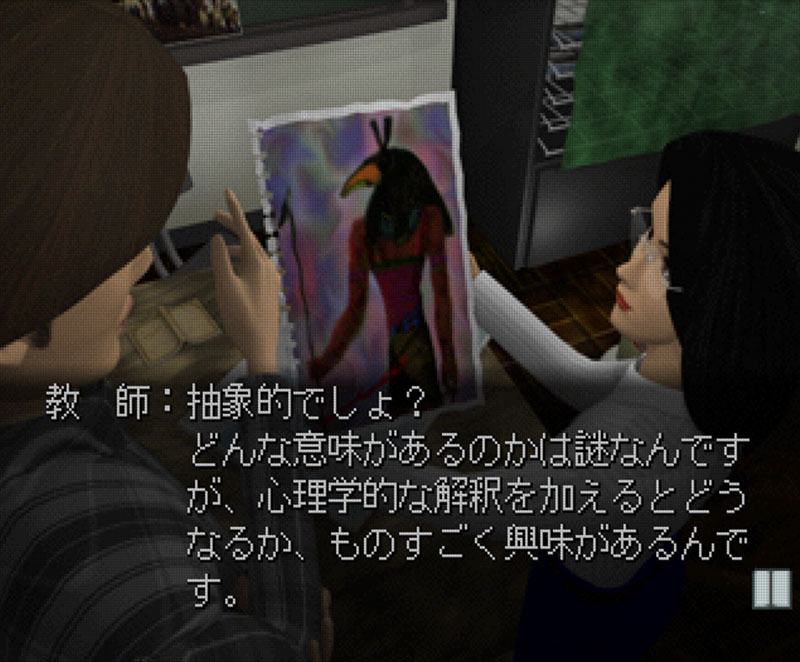
Let's address the elephant in the room: the CG characters don't look good. In an era when game companies were beginning to experiment with 3D graphics to make games more cinematic, most still struggled to make them look presentable, and this game is no exception.
The 3D graphics are pre-rendered, so they do look better than what the 32-bit consoles could actually pull off in real time, but that doesn't say much. The characters look off, and in cutscenes their movements are stiff. I actually chuckled when I first saw Maria, knowing she was supposed to be sixteen years old.
Are you interested in Maria? We're sure you'll like these products!
The soundtrack is also nothing to write home about. The same handful of songs play throughout the entire game, so more variety would have been welcome. The silver lining is that the tracks are unobtrusive, so I never got genuinely annoyed listening to them on repeat.
In short, the technical side of the game doesn't shine, so your enjoyment will depend entirely on whether the plot's mysteries can hold your attention. But I'll say this much: they hooked me enough to see it through to the end.
An Interesting but Undercooked Plot
After a failed attempt on her life, sixteen-year-old Maria is taken to a hospital, where a doctor named Jun takes care of her. Playing as Jun, you set out to uncover the mysteries behind what happened to Maria, the trauma she suffered as a child, while threads slowly connect to events in Jun's own past as well.
The plot revolves around multiple personalities living inside Maria, and figuring out who they are and why they exist is central to the experience. It's even reflected in the game's title: "the reason why you were born."
Overall I found the story compelling, but it could have been developed more thoroughly. The multiple personalities don't have as much impact on the plot as you might expect, the pacing is slow, and the ending arrives a little too abruptly. Some major mysteries are only explained during the epilogue, for example.
Despite how that sounds, I did enjoy unraveling what the story had to offer.
Gameplay
As a visual novel, there isn't much gameplay to speak of. Most of the game is spent reading Jun's thoughts and his dialogues with other characters. There are multiple choices to be made, but most seem to have no real effect. A few let you visit locations and meet characters you otherwise wouldn't, though again without meaningfully affecting the plot.
Some choices do influence the ending, however. They don't alter the core mystery, but the outcome of the final scenes varies depending on a handful of decisions made throughout the game. Nothing that will have you replaying it, but it does give your choices some weight.
Let us help you buy Japanese treasures
Let us help you buy Japanese treasures
Ready to access Japan's incredible online stores? Our expert team handles everything from ordering to shipping, so you can focus on finding those perfect items.
Beyond the visual novel segments, there's a short first-person exploration section. It's not rendered in real time so your freedom of movement is limited, but it does add a welcome bit of variety.
There's also an in-game computer, accessible at any time. It holds information on the characters, items you've found, and the personalities inside Maria. There's even a tile-matching puzzle minigame if you want to take a break. After certain story beats, you also receive emails with commentary on the plot and the game itself.
There aren't so many characters or items that you'll lose track of things, but the computer is handy if you step away from the game for a while and need a refresher.
A Note for Japanese Learners
Being a visual novel, Maria is very text-heavy. It deals with complex subject matter like dissociative identity disorder, and takes place mostly inside a hospital, so the vocabulary can get quite technical. The absence of furigana makes dictionary lookups more tedious than usual. The text on Jun's computer is also small and difficult to read due to the console's low resolution.
On the plus side, most characters speak politely, so learners shouldn't have to contend with heavy slang or overly casual speech.
All things considered, I'd say this one is geared toward advanced learners. For a game built almost entirely around reading, having to stop frequently to look up words can take the fun out of it.
Conclusion
As a Japan exclusive, it's easy to see why no one pursued a Western release. It doesn't break new ground in the visual novel genre, and the visuals hold it back. It would have been a tough sell.
That said, I think those who enjoy mystery stories and want to put their Japanese to the test can find real enjoyment here, especially since used copies can be found for quite cheap. And if you want to hunt one down straight from Japan, we at Negai Japan can help you get this and other Japanese exclusives.
Liked this post?
Follow us on the social media of your choice to be the first to know about our latest updates!
 BRL
BRL AUD
AUD CAD
CAD EUR
EUR GBP
GBP MXN
MXN


 Maria: Kimitachi Ga Umareta Wake
 マリア 君たちが生まれた理由
 PlayStation 1
 Saturn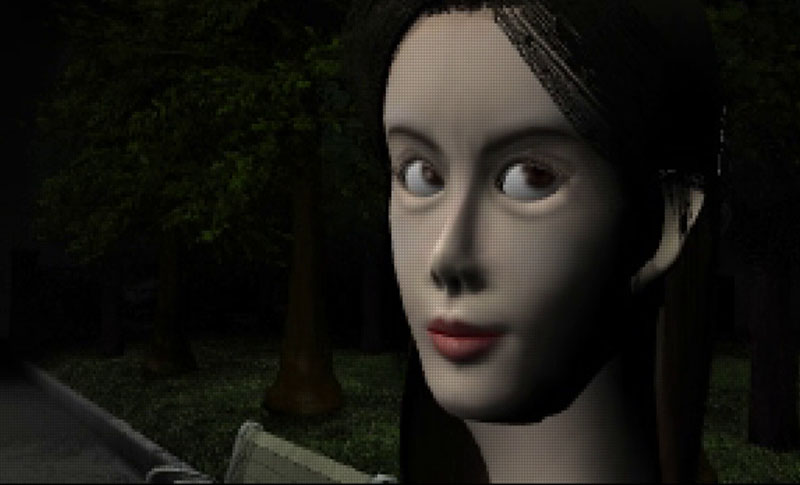





 UFO: A Day in the Life
 is one of the strangest, most patience-testing games I've picked up on impulse: a PS1 exclusive where you hunt invisible aliens across an apartment building using nothing but timing and a camera. Here are my first impressions after 3+ hours.
UFO: A Day in the Life
UFO: A Day in the Life is one of the strangest, most patience-testing games I've picked up on impulse: a PS1 exclusive where you hunt invisible aliens across an apartment building using nothing but timing and a camera. Here are my first impressions after 3+ hours.
 Jade Cocoon: Story of the Tamamayu
 is a unique PS1 monster-collecting RPG that stands apart from Pokémon with its fusion system, where merged creatures become hybrids of their parents. Discover what makes this 1998 classic special, from its strategic gameplay to its rich lore.
Jade Cocoon: Story of the Tamamayu
Jade Cocoon: Story of the Tamamayu is a unique PS1 monster-collecting RPG that stands apart from Pokémon with its fusion system, where merged creatures become hybrids of their parents. Discover what makes this 1998 classic special, from its strategic gameplay to its rich lore.
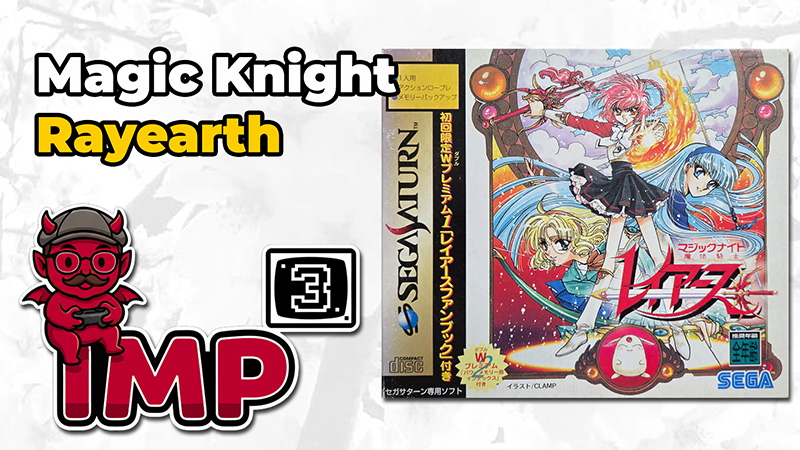 Magic Knight Rayearth
A surprisingly polished action RPG based on the beloved anime and manga series. Even if you're not a fan of the original work, Magic Knight Rayearth for Saturn is well worth your time.
Magic Knight Rayearth
A surprisingly polished action RPG based on the beloved anime and manga series. Even if you're not a fan of the original work, Magic Knight Rayearth for Saturn is well worth your time.

 Facebook
 Youtube
 Instagram