Last updated on April 14, 2026
Consolidating packages from Japan can reduce shipping costs, but it does not always save money. It usually helps when several smaller items can ship together efficiently, but splitting your order may be better when one parcel becomes too large, too heavy, or loses access to a better shipping option.
If you buy more than one item from Japan, it is easy to assume that putting everything into one box will always save money. Sometimes it does. Sometimes it does not. The final shipping cost depends on more than the number of items in your order. Weight, box size, destination country, and shipping method availability can all change the result. One larger parcel may look simpler, but in some cases, splitting your order into smaller shipments is the smarter choice.
If you are new to the process, it also helps to understand
what proxy buying means before comparing shipping options.
In this guide, you will learn when package consolidation usually helps, when it can backfire, and how to compare your shipping options before you buy. If you collect anime figures or other fragile items, this matters even more because cost and protection need to be balanced together.
The biggest mistake people make when trying to save on shipping from Japan
The most common mistake is assuming that one bigger parcel is automatically cheaper than two smaller ones. That sounds logical at first. You pay one international shipment instead of two, so the total should go down. But shipping does not work that way in every case. A parcel that becomes too heavy, too large, or no longer qualifies for a better shipping method can end up costing more than expected.
This is especially important when you are buying figures. A small Nendoroid, two acrylic stands, and a few trading cards may still fit into an efficient parcel. A larger scale figure with a bulky box can change the shipping math much faster.
A better approach is this: do not ask,
“Can I combine everything?” Ask,
“What happens to my cost if I combine everything?” That small shift helps you make better decisions before you buy, not after the parcel is already packed.
When consolidating packages from Japan usually helps
Consolidation usually helps when you are combining several smaller items that can still ship efficiently together. A common example is when you buy items across different days or weeks and send them only after everything arrives. Instead of paying international shipping multiple times, you wait, group the items, and send one parcel during the storage window.
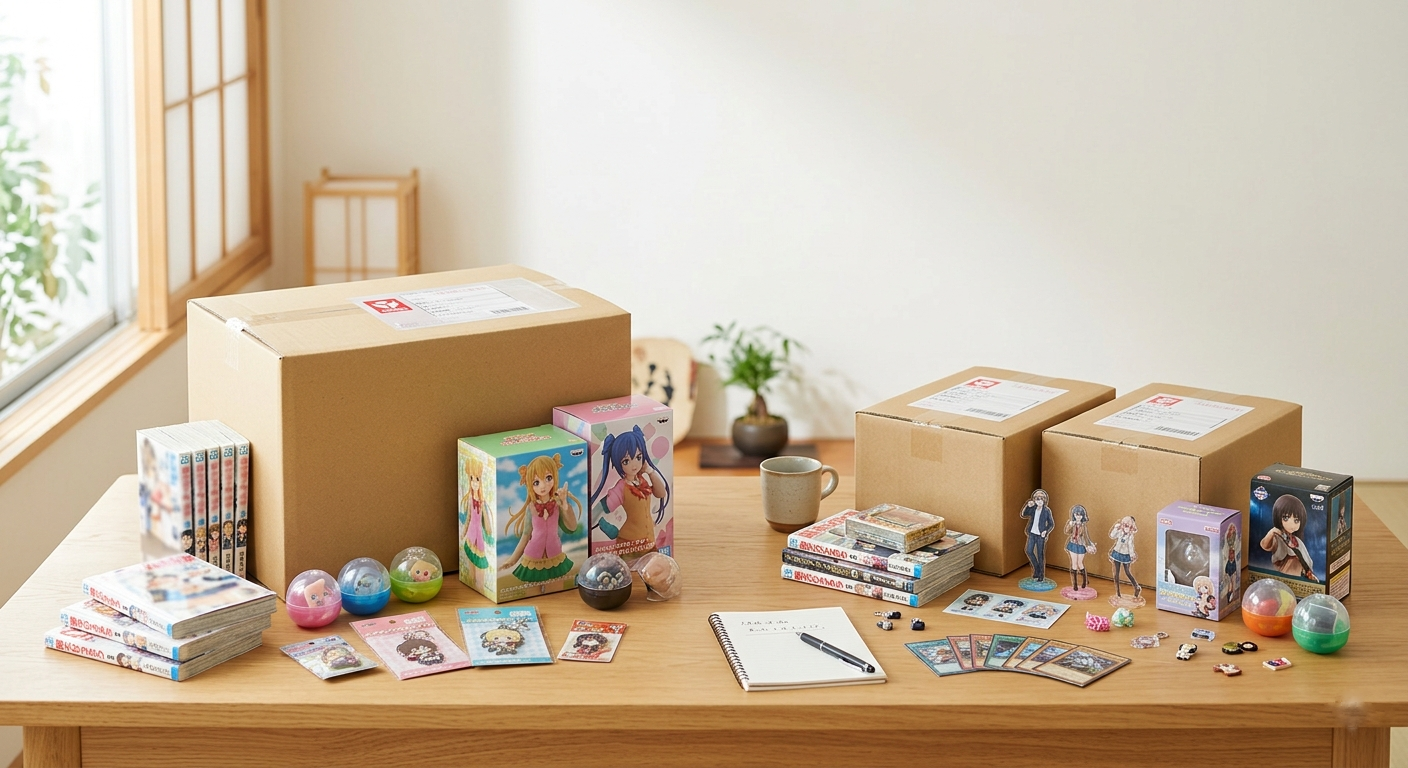
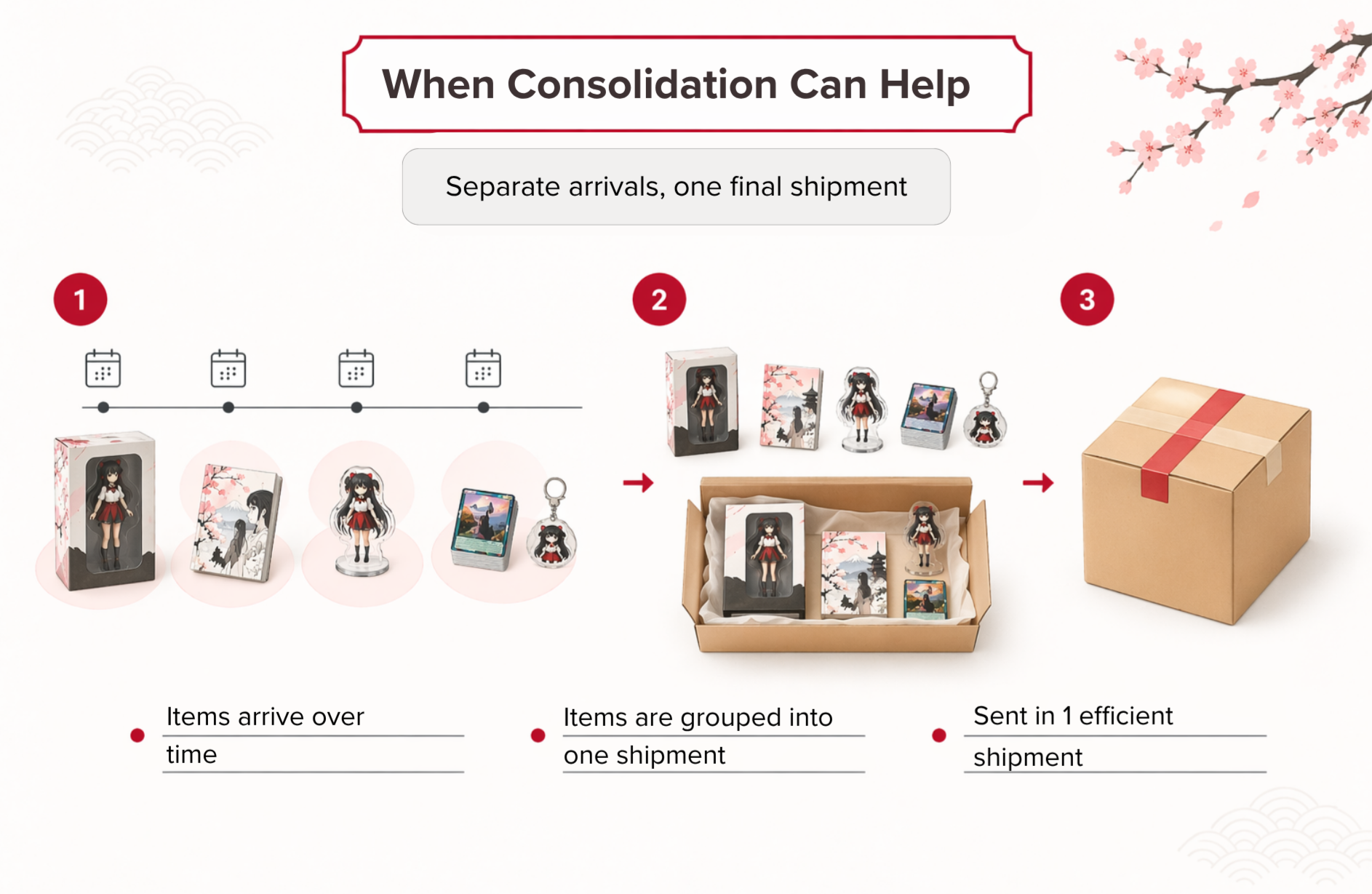 When several smaller items arrive at different times, consolidation can be a more efficient way to organize the shipment
Consolidation also tends to work well when the items are small or medium-sized, when the final parcel still fits a good shipping tier, and when sending each item separately would clearly multiply your postage.
Mini case 1: when consolidation helps
Imagine that you bought one prize figure, two keychains, and one small art book. On their own, these items would be simple to ship, but sending them separately could mean paying international postage more than once. If they still fit safely and efficiently into one parcel, consolidation may be the cleaner and more economical choice.
It can also help operationally. One parcel usually means one tracking flow to follow and fewer separate shipping decisions to make. That said, consolidation is helpful because it keeps the parcel efficient, not because one box is always cheaper.
When splitting your order may be the smarter move
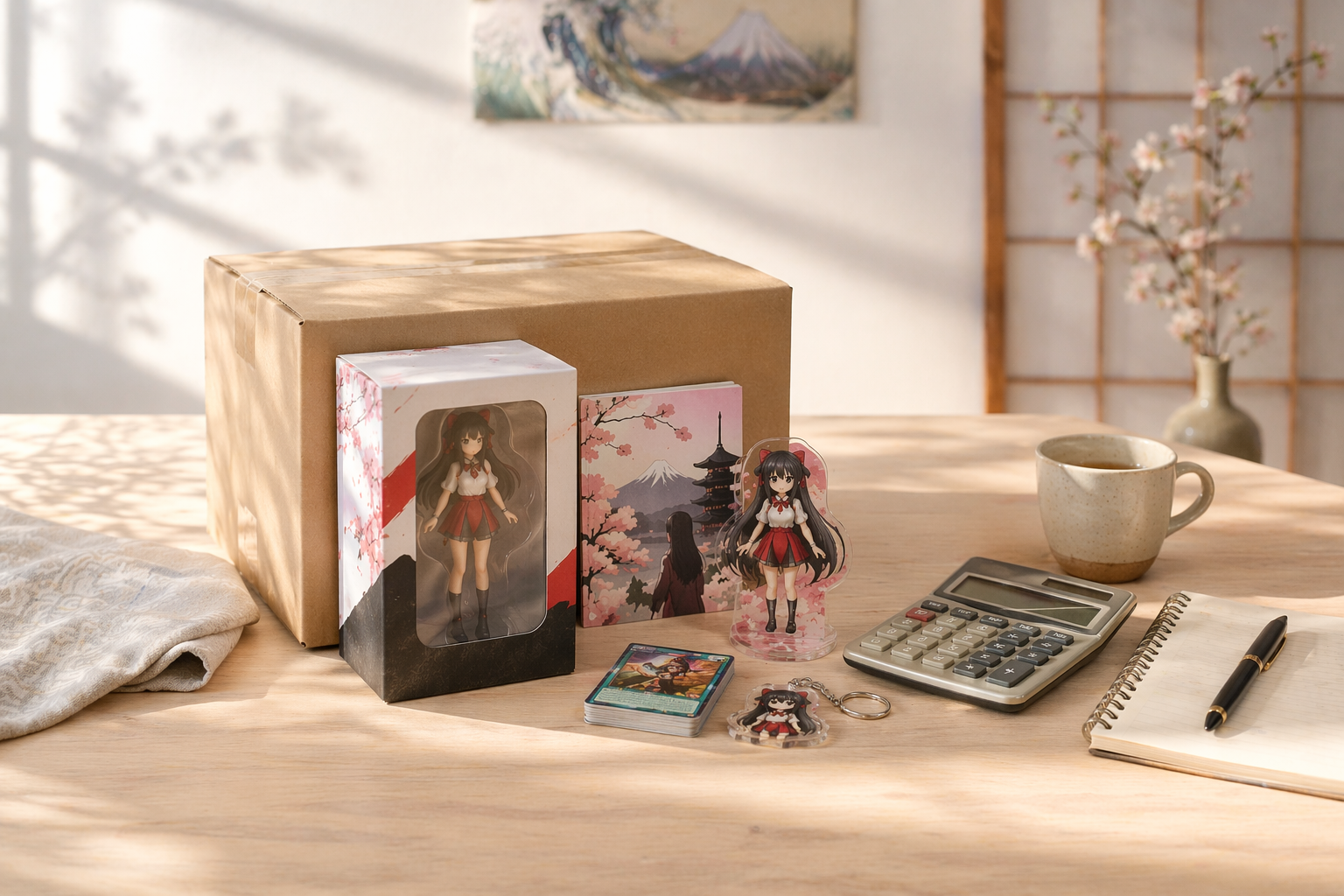
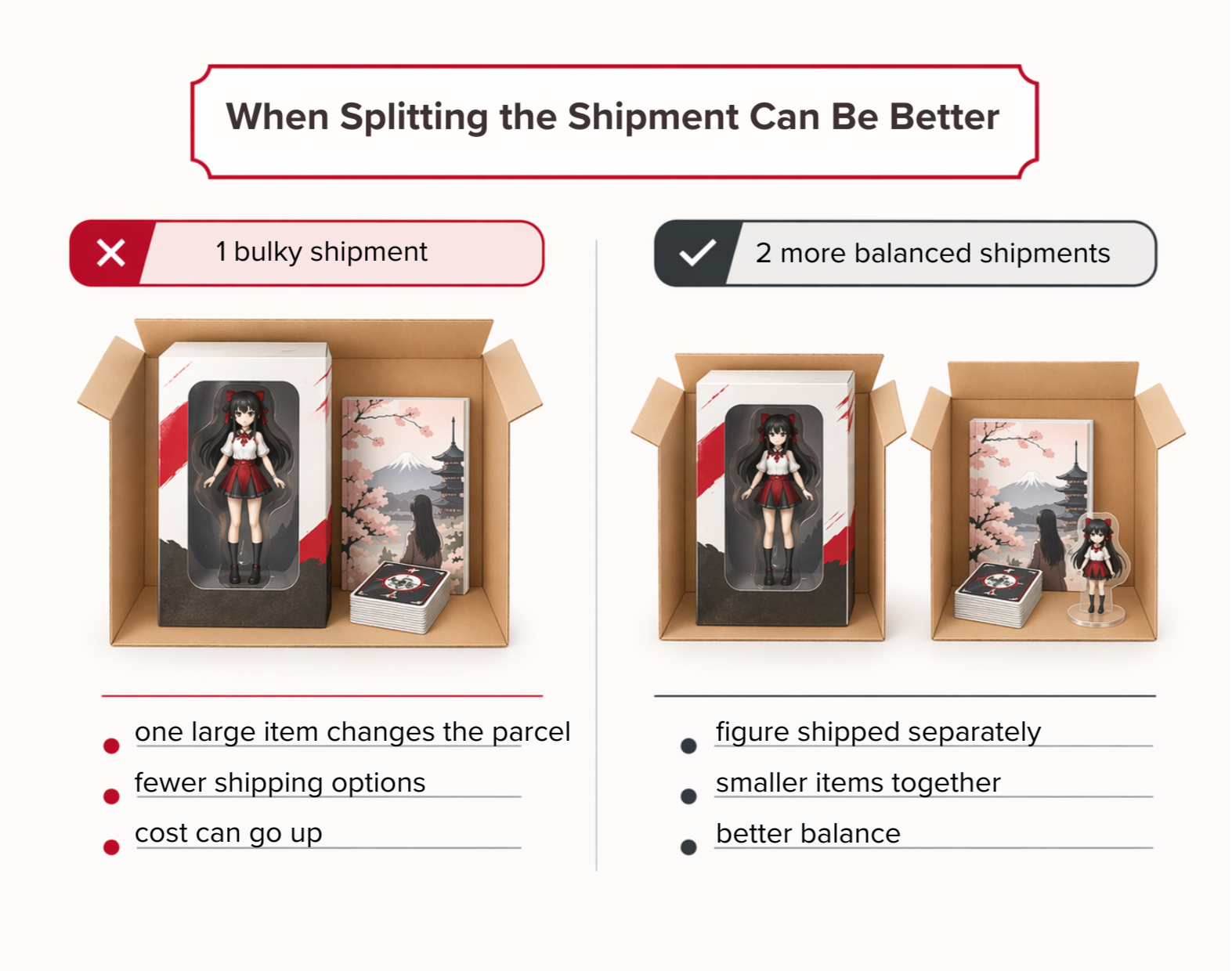 When one larger item changes the parcel too much, splitting the shipment can create a better result
Sometimes the cheaper decision is to separate your shipment instead of combining everything. This can happen when one larger parcel becomes too heavy or too large for a better shipping method. It can also happen when one item, especially a boxed figure, changes the parcel dimensions enough to remove a better option.
You do not need to memorize shipping rules to understand the idea. The practical lesson is simpler: a lower-cost option may exist for one parcel size, that option may disappear once you add another item, and once that happens, the total cost can jump.
This is one reason why figures need extra care in shipping decisions. A figure with a large retail box may be worth shipping separately if combining it with other items pushes the full parcel into a worse method or creates more risk.
Mini case 2: when splitting is smarter
Imagine that you bought one larger scale figure with a bulky manufacturer box, one paperback manga, and one small card accessory set. At first, sending everything together sounds more efficient. But if the figure box makes the parcel much larger, the full shipment may lose access to a better option. In that scenario, shipping the figure separately and combining the smaller items into another parcel may create a better balance between cost and safety.
Splitting can also make sense when you have one urgent item and one non-urgent item, when one product is fragile and needs more careful packing space, or when the final combined parcel starts to feel oversized for its value. In other words, consolidation is not the goal. A better total outcome is the goal.
What really changes your shipping cost
When people think about shipping, they often focus only on weight. Weight matters, but it is not the only factor.
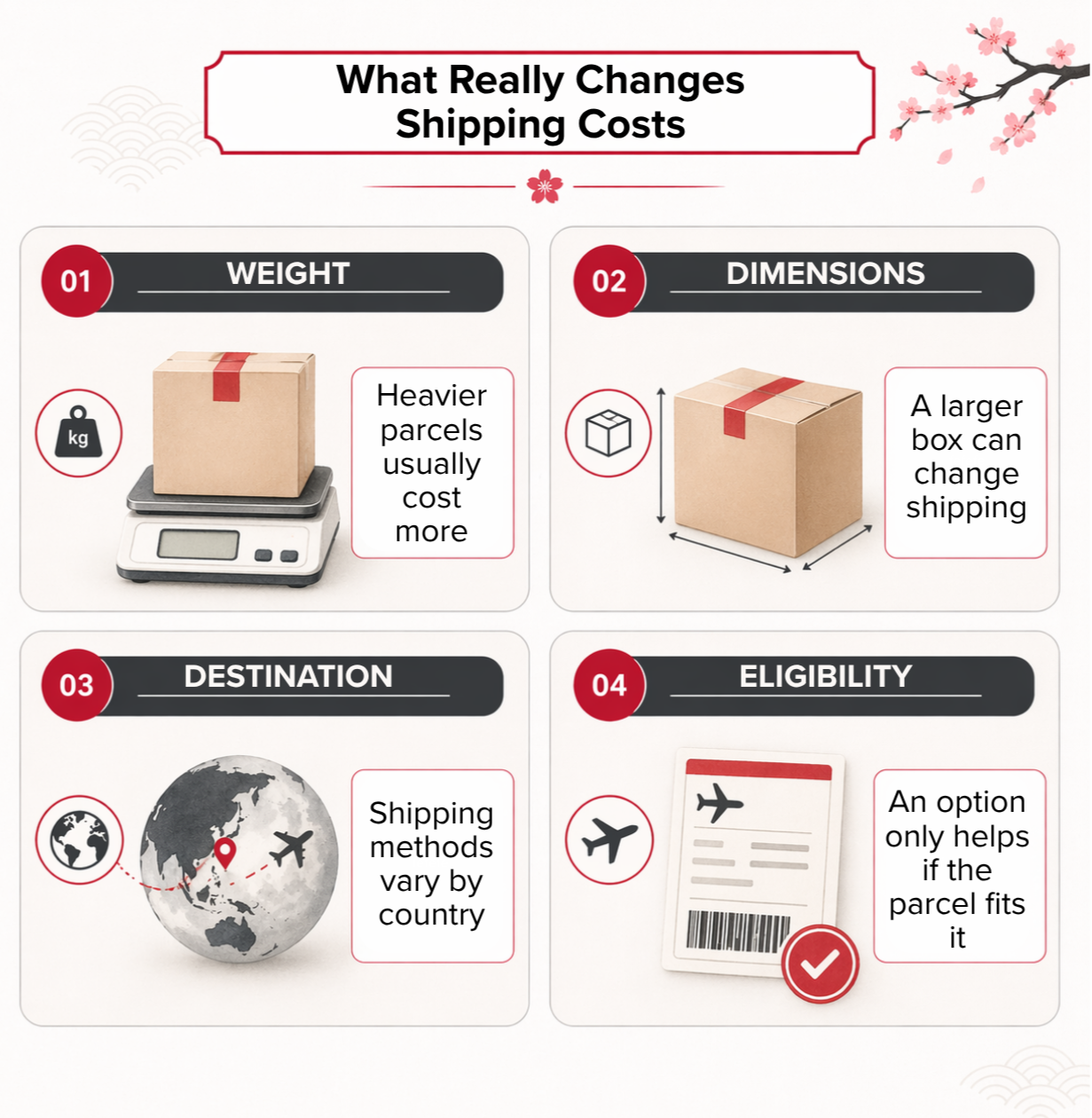 Shipping costs depend on more than weight: box size, destination, and method eligibility also change the final result
Weight
Heavier parcels usually cost more. That part is straightforward.
Parcel dimensions
A box that becomes much larger can lose access to a better shipping method, even if the total weight still seems reasonable. This is where figure collectors often get surprised. The item itself may not be very heavy, but the manufacturer box can take up more room than expected.
Destination country
The shipping methods available for one country are not always the same for another. Route availability matters.
Method eligibility
A better shipping option only helps if your parcel still qualifies for it. That is why guessing based on item count alone is risky. Two orders with the same number of items can lead to very different shipping outcomes.
What the shipping estimate includes and what it does not include
Before you compare shipping methods, it helps to understand what the estimate is actually trying to show you. In simple terms, the estimate helps you compare scenarios such as sending everything together, shipping a smaller parcel first, or choosing a faster method versus a slower one.
A good shipping estimate should help you plan around the costs you can reasonably compare before purchase. It should also make clear that some parts of the final landed cost depend on your destination country, local rules, and the type of item being shipped.
That matters because many first-time buyers confuse “shipping estimate” with “final total after everything.” They are not the same thing. A good estimate gives you clarity before purchase. It helps you avoid obviously bad decisions. It does not remove every variable after the parcel leaves Japan.
If you want to compare scenarios with more confidence, you can
try our shipping estimate before placing the order.
How to compare your options before you buy
The safest way to save on shipping is to compare at least two realistic scenarios before placing the order.
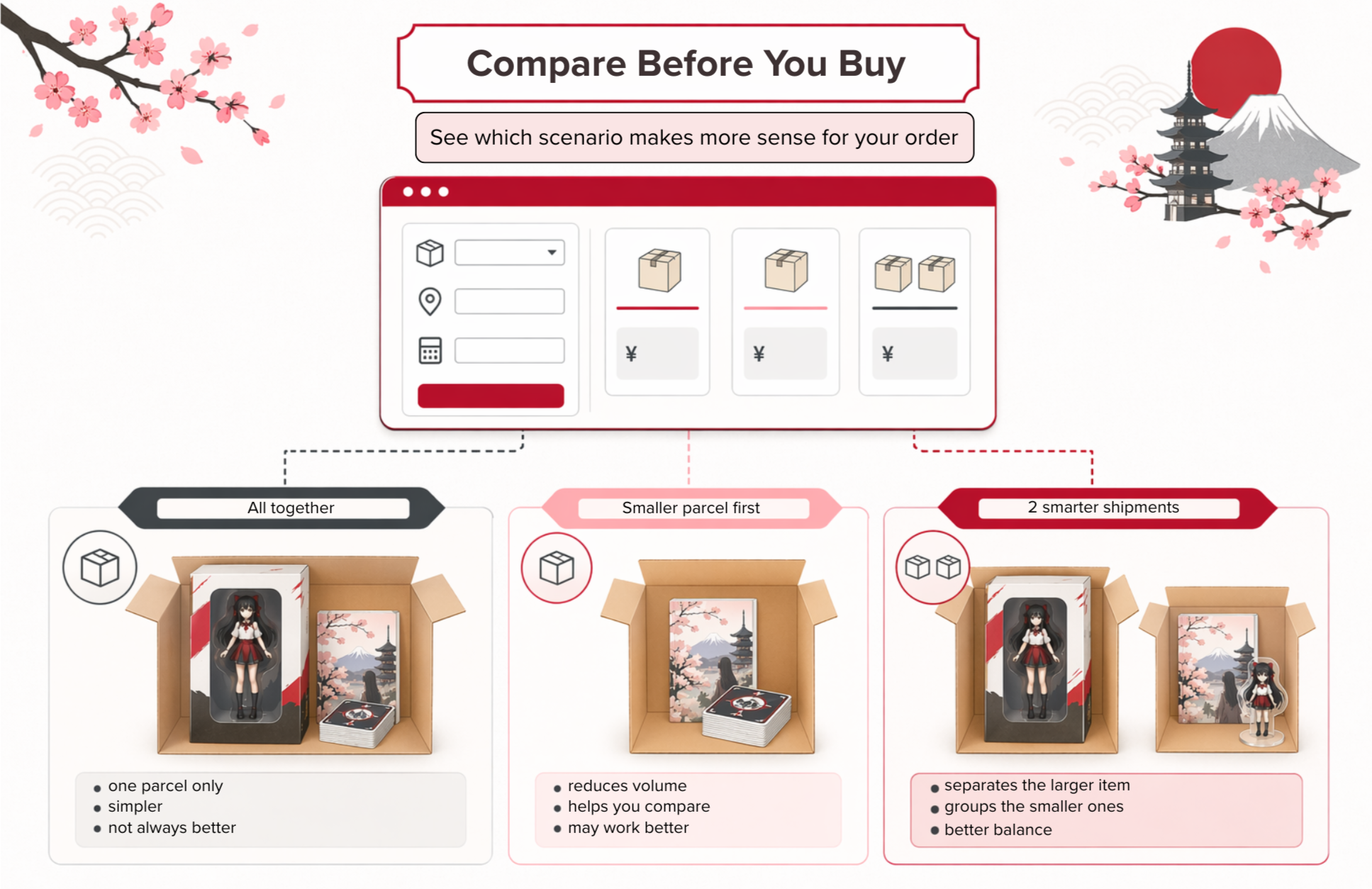 Comparing shipping scenarios before buying helps you make a clearer decision
What happens if I consolidate everything?
This is your first scenario. It gives you a baseline.
What happens if I remove the bulkiest item?
This helps you see whether one product is driving the cost increase.
What happens if I separate the order into two smarter parcels?
This is often the comparison people skip, even though it is sometimes the most useful one.
Sometimes the smartest move is to wait for one more item, ship part of the order now, keep the fragile figure separate, or choose a slower method for better overall balance. The key is to compare before committing, not after assuming.
When importing from Japan may not be worth it
This is the part many stores avoid, but it is one of the most useful questions you can ask. Sometimes importing from Japan is still the right move even after shipping and customs. Sometimes it is not.
A few common cases where importing may not be worth it are:
- when shipping feels disproportionate to the item value,
- when the order is too small to justify the full process,
- when the item is fragile, bulky, or awkward enough to make shipping inefficient,
- when the only viable method is too slow for your situation,
- or when restrictions create too much uncertainty for that specific item.
This does not mean you should stop buying from Japan. It means you should compare with clear expectations. A smart proxy decision is not
“Can I buy this?” It is
“Does this purchase still make sense after shipping?” That is exactly where a better estimate helps.
Check Your Shipping Options Before You Place the Order
If you are buying figures, plushies, books, cards, or other collectibles from Japan, do not assume that consolidation is always the cheapest answer.
Sometimes it is the best option. Sometimes a split shipment is cleaner. Sometimes the smartest move is to wait. And sometimes the right answer is realizing that this order does not make sense yet.
Use the estimate first, compare your scenarios, and decide with more context.
Try our shipping estimate before you buy and see whether consolidation really makes sense for your order.
Send us your item link and we will help you compare the options.
 USD
USD BRL
BRL AUD
AUD CAD
CAD EUR
EUR GBP
GBP MXN
MXN




 Tracking and Delivery Issues After Buying from Japan
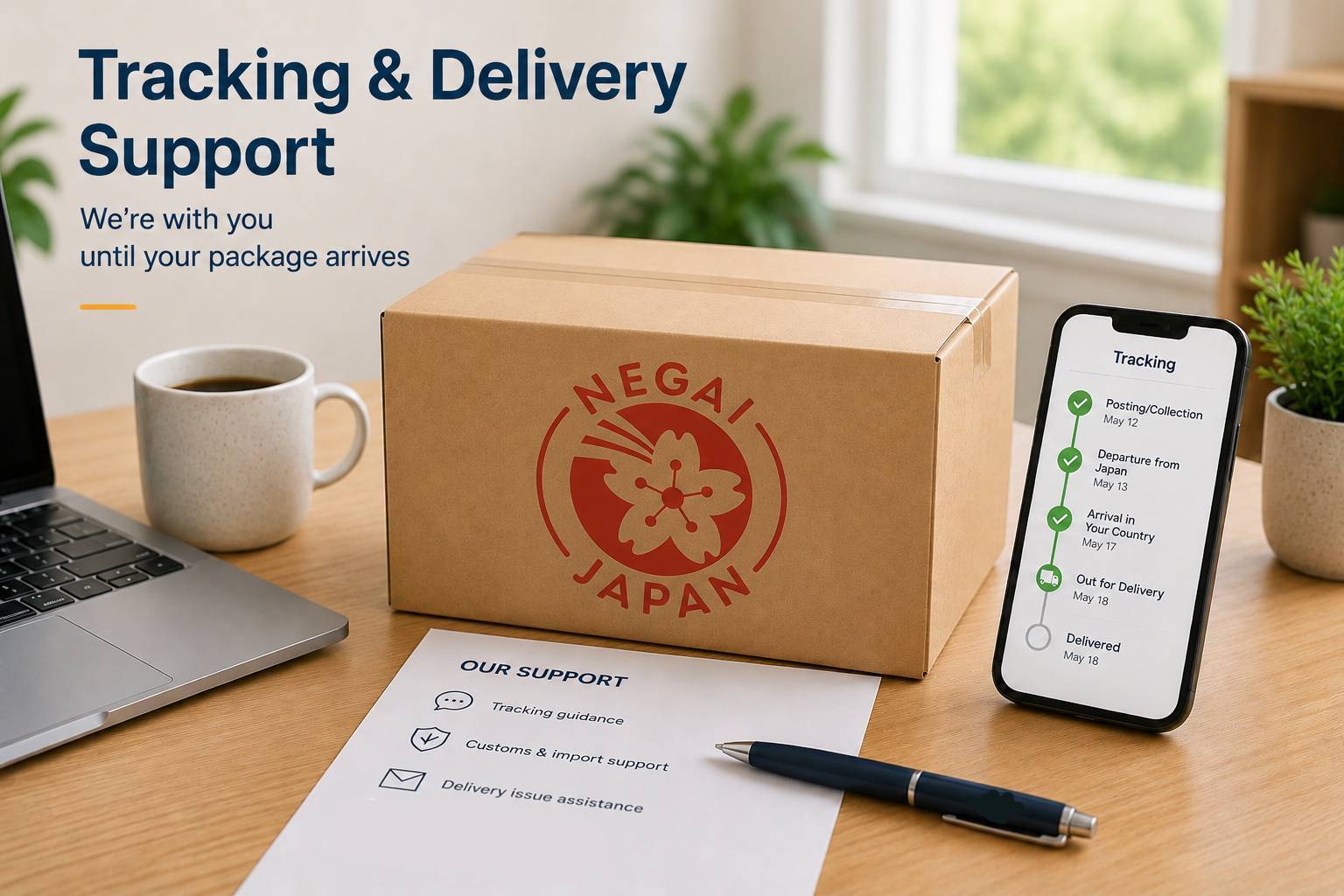
After a package leaves Japan, tracking updates, customs processing, and local carrier notices can feel confusing. This guide explains common Japan Post tracking statuses, why updates may pause, what to check when customs or delivery action appears, what to prepare if a package is delayed, returned, damaged, or possibly lost, and when to contact Negai Japan for help.
Tracking and Delivery Issues After Buying from Japan
After a package leaves Japan, tracking updates, customs processing, and local carrier notices can feel confusing. This guide explains common Japan Post tracking statuses, why updates may pause, what to check when customs or delivery action appears, what to prepare if a package is delayed, returned, damaged, or possibly lost, and when to contact Negai Japan for help.
 Inside Our Packing Process: How Negai Japan Ensures Your Japanese Products Arrive Safely
Discover how Negai Japan's professional packing process protects your Japanese purchases during international shipping. From strategic weight distribution to compact arrangement, see our meticulous 5-step method that ensures your items arrive safely while keeping shipping costs low. Plus, experience our behind-the-scenes ASMR packing video.
Inside Our Packing Process: How Negai Japan Ensures Your Japanese Products Arrive Safely
Discover how Negai Japan's professional packing process protects your Japanese purchases during international shipping. From strategic weight distribution to compact arrangement, see our meticulous 5-step method that ensures your items arrive safely while keeping shipping costs low. Plus, experience our behind-the-scenes ASMR packing video.
 How to Find Products on Japanese Online Stores
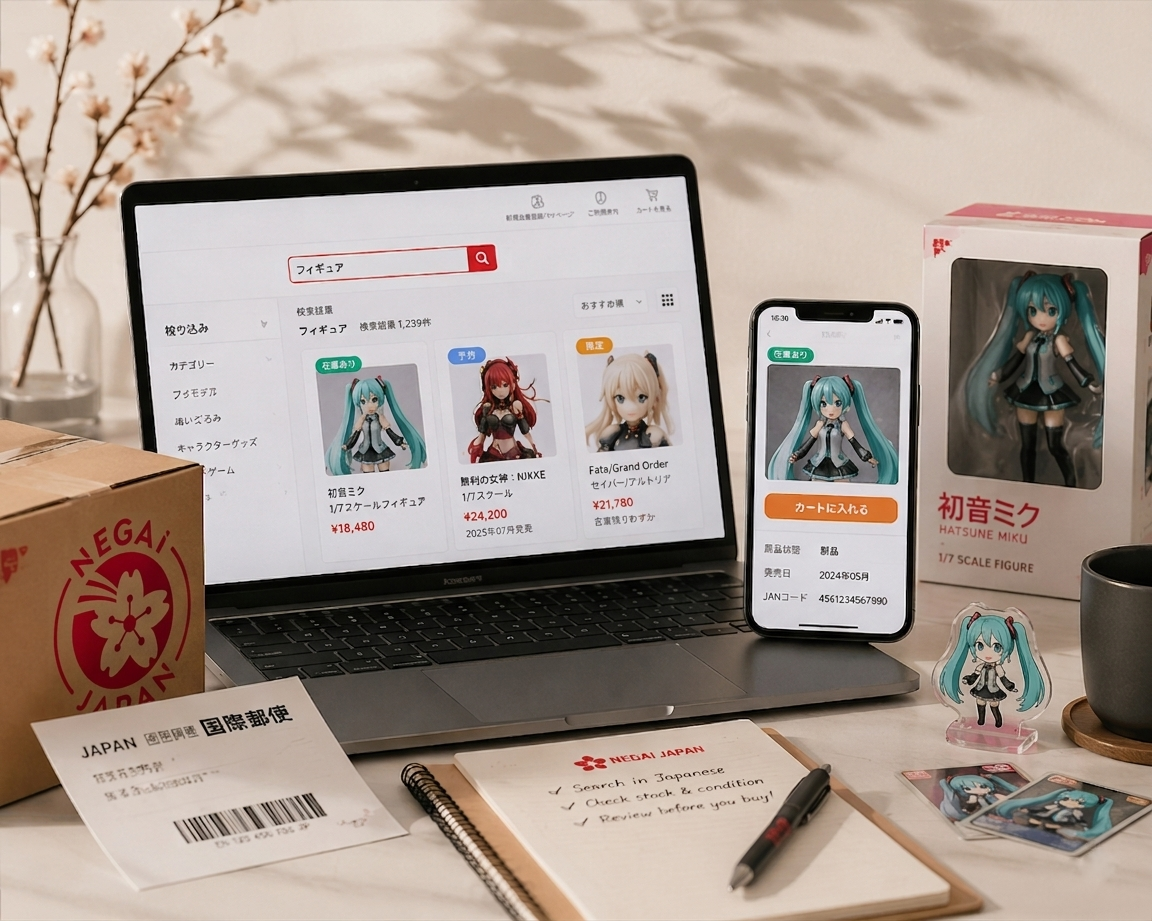
A practical guide to help you search Japanese stores, read product labels, and understand key terms before deciding to buy.
How to Find Products on Japanese Online Stores
A practical guide to help you search Japanese stores, read product labels, and understand key terms before deciding to buy.

 Facebook
 Youtube
 Instagram